
people have joined the Farms app. use it each month. Their work has shaped ours. With V5, we are taking what we have learned together into a new era.
Some fly agricultural airplanes. Some operate drones. Some farm the land, organize a crew, or make sure the next job is ready to happen. Each brings a different working day into the application, with its own demands, changing conditions and decisions that cannot wait.
We find that extraordinary. What began as a tool for agricultural aviation has become a trusted part of more people's work. Today, there are saved in Farms, totaling approximately across those records.
Four versions of listening, learning and building have brought us to Farms V5, and we are thrilled to share what comes next.
Our first public release arrived in 2023. Farms grew around the practical needs of agricultural aviation: understanding an area, checking the weather, navigating, recording work and delivering something useful to the person waiting for the result. That aviation foundation continues into V5, including our public catalog of more than across .
Farmers and drone operators were already finding value in Farms and asking for tools suited to their work. The relationships were already there: providers working across farms, farmers relying on different specialists, and crews bringing their own knowledge to the job.
Listening to that community means taking the time to understand the work behind a request. A feature suggestion often carries a much larger story about a difficult day, a missing record, or something that takes more effort than it should.
Keeping Farms close to the human effort behind agriculture is a responsibility we share.
For thousands of years, people have worked the land to sustain families, settlements and the increasingly elaborate human experiment we are all participating in. We have multiplied, built cities and reshaped the planet. All of that still depends on people growing food and knowing how to care for the places that produce it.
Working the field takes knowledge, judgment and physical effort. It deserves respect, including respect from the software asking for a place in someone's day. A person who has spent that day doing demanding work should be able to find the information they need and get on with it.
That responsibility extends to the land itself. Improving productivity means paying attention to how we use time, equipment, water, energy and inputs. Precision tools can help people examine those choices and plan their work with greater care. This is central to why we build Farms.
The agentic era gives us new ways to do that. AI changes what we can build, how we investigate a problem and which combinations of tools become practical. We took that opportunity to rethink the application and reinvent parts of our approach. We built Farms V5 from the ground up so AI can understand the work and help people carry it out.
We call the useful meeting of tools, connections and experience benefit convergence. With V5, we are putting that idea to work in planning, fieldwork and the records people rely on afterward.
When you open an area in V5, its boundaries, crop history, weather, satellite imagery and vegetation history are there with the records from the field. Photographs, written and voice notes, files and activity stay connected to the place. The next planting adds to its story.
The area is designed to hold both original records and the context AI builds from them. When you return, a photograph from a previous visit, a note about the crop and the record of an application each help explain what you are looking at today. Keeping them connected gives the next decision a better starting point.
Farms Services gives service providers a place to organize customer jobs, equipment and teams. A provider can schedule work and prepare records and reports before a customer joins Farms. A farmer can manage their own areas and operations independently. When their work meets, they can bring the relevant people into a shared operation, with access suited to each person's role.
Preparing a job brings together the areas, dates, equipment, products, doses and instructions everyone involved needs. Whether the work is spraying, fertilization, seeding, soil preparation or harvesting, the operation keeps those details together. Finance and maintenance records help people keep track of costs and care for their equipment.


Spraying
Talhão 04 · 7 Sep 2026

Shared operation
 Operation team
Customer · Fazenda Boa Vista


Service provider · AgroVoo



5 participants · permissions per person
Photos
8 photos


Linked GOs
2 completed recordings. Each GO keeps its own route and duration; its data is not included in operation totals.
For the pilot or drone operator preparing that job, Atlas makes the plan something they can examine before mobilizing equipment and people. Our proprietary AI planning and simulation engine explores alternatives using mathematical and physical models.
For agricultural aircraft, that includes the relationship between the runway and the application area, passes, turns, transit, changing loads and returns for replenishment. For drones, the plan also has to account for the rhythm of tanks, batteries, refills, battery changes and support on the ground. Waiting belongs to the operation too, even when nothing particularly exciting is happening on the map.
The aircraft and drone simulators make these choices visible through routes, replay and estimates of time and resources. You can compare supported alternatives and see where their demands come from. Each estimate comes with the model's assumptions and conditions, so you can judge what it means for the job ahead.
Power grid hidden.
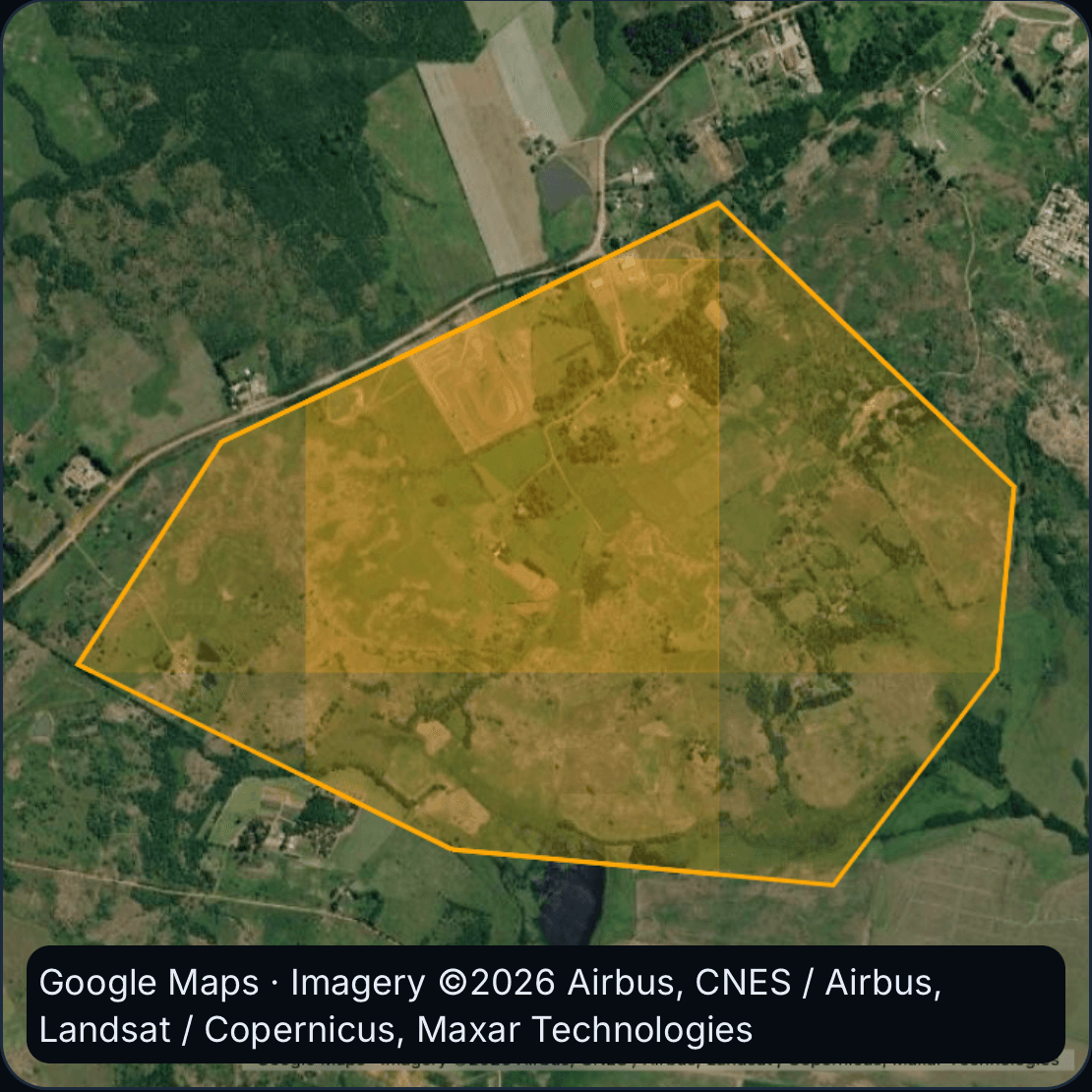
Area and airstrip from the original file
Once the job is underway, people with access can follow shared phone positions on the map while GO is recording and the app is on screen and connected. Linked tracks, photographs, observations and Activity help them follow the work and understand what was recorded, when and by whom. Reports carry that information into the conversation with a customer or the next person involved.
Sofia, our AI agent, gives the information coming back from the field a lasting context. It generates descriptions and suggested tags for supported photographs, including photos that do not yet belong to an area. When a photo's recorded location clearly identifies an area and the person has permission to link it there, Sofia makes that connection. When the match is uncertain, it asks for confirmation.
As field records and linked photo context change, Sofia updates the area's context automatically. It preserves versions and links to the underlying sources, so people can follow how that understanding developed without reconstructing the whole story on each visit. Sofia's interpretations remain separate from what the original records say.
Sofia
Context for Field 04
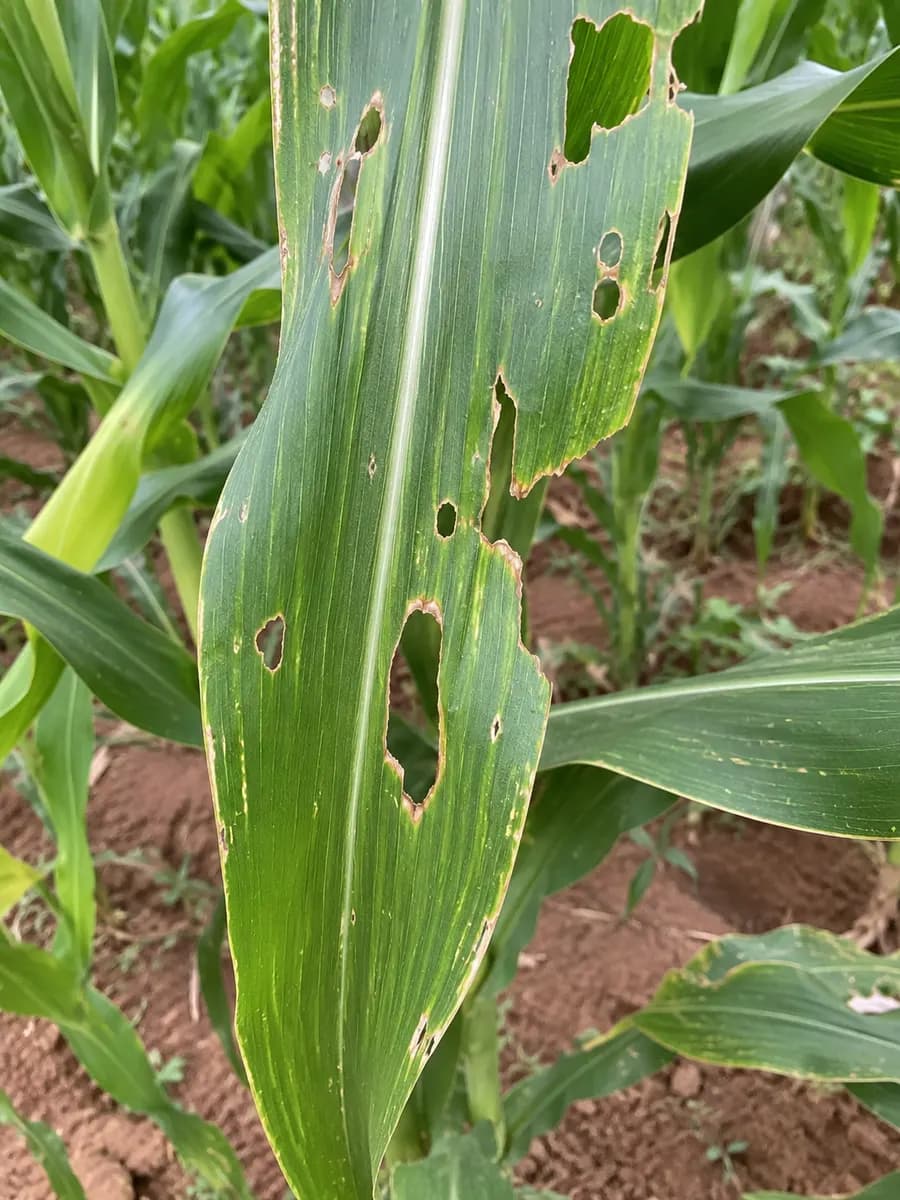
Holes of varying sizes and missing tissue along the leaf edge. Some edges have turned brown; the rest of the leaf remains green.
Field 04 brings together a record of standing water on 23 October and new observations of damage to corn leaves on 25 October. The field note reports holes in leaves at three locations and asks for new photos on Friday.
The photos and note from 25 October add leaf observations to the history. They do not establish a causal link with the water recorded earlier.
Sources for this context
Farms AI brings conversational assistance across the application, using the current screen's context to help people understand available information and move through supported tasks. When preparing a job, you can ask about tomorrow's wind forecast for an area and have Farms AI open the forecast for you to inspect. The decisions about the work remain with the person doing it.
Through MCP, a standard for connecting AI assistants to applications, people can also let other assistants read the Farms information they have permission to access. It gives that knowledge another way to be useful, in the tools they already use.
For Farms to reach more people, taking part has to be practical. An independent drone operator, an agricultural pilot, a small farm and a larger service business each need tools that are useful on their own terms. Price has to leave room for the person working alone as well as the person managing a team.
V5 combines a useful free core with paid workspaces for additional management, team capacity and storage. A workspace can cover invited collaborators' participation in shared work, so that work does not require a separate purchase from every person involved. The model supports the company while making room for the people whose contributions make collaboration worthwhile.
To everyone who has used Farms, told us what was difficult, asked for something better or helped us understand another part of the work: thank you. Seeing these tools come together around your work makes us proud. We are honored to be of benefit to this community. Your experience has helped shape V5, and it will continue to shape what comes next.
Welcome to Farms V5. We are very glad to be building this together.